Short answer: weigh your cat under the same conditions, record the result, and look for a trend instead of chasing one “perfect” number. For a healthy adult cat, a calm monthly home check is a practical starting routine—not a universal veterinary rule. If your veterinarian is treating a health or weight problem, use the schedule and target they give you.
A home weight log cannot diagnose illness, and weight alone does not describe body composition. Its value is simpler: it can turn “I think my cat looks different” into dates and measurements your veterinary team can interpret.
First, choose one repeatable weighing method
The best method is the one your cat tolerates and you can repeat consistently. Use the same scale, the same container or carrier, and roughly the same time of day. Record the method with the number so a later reading can be compared fairly.
| Method | How to do it | Main limitation |
|---|---|---|
| Pet or baby scale | Place a non-slip towel or shallow box on the scale, tare it to zero, then let the cat settle briefly | The cat must stay still long enough for a stable reading |
| Carrier method | Weigh cat plus carrier, then weigh the empty carrier and subtract | Use the same carrier and remove changing contents such as blankets or bowls |
| Person method | Weigh yourself, then weigh yourself holding the cat and subtract | A human scale may not show small changes clearly |
Do not wrestle a frightened cat onto a scale. A reading obtained through chasing and restraint is not worth creating fear. Try a box, carrier, food lure, or another quiet time. If home weighing remains stressful, ask whether your clinic offers a brief technician or nurse weight check.

Use a five-line record, not a number alone
Each entry should take less than a minute. Record:
- Date and time
- Weight and unit—keep kilograms or pounds consistent
- Method—pet scale, carrier subtraction, or person subtraction
- Food and water pattern—same, more, or less than usual
- Useful context—vomiting, diarrhea, medication change, reduced jumping, or another noticeable change
If one result looks surprising, let the cat settle and repeat it once. Check that the scale is on a hard, level surface and that the container was correctly tared. Keep both readings in the note rather than silently choosing the one you prefer.
A completed example: what the trend adds
This is a hypothetical example, not an account of Ruby, Loki, or Coco.
| Date | Weight | Method | Context |
|---|---|---|---|
| July 1 | 4.8 kg | Carrier subtraction | Usual appetite and activity |
| August 1 | 4.8 kg | Same carrier | No noted change |
| September 1 | 4.7 kg | Same carrier | Finishing meals more slowly |
| October 1 | 4.5 kg | Same carrier; repeat matched | Eating less and jumping onto the sofa less often |
The useful information is not merely “4.5 kg.” It is a repeated downward pattern collected by the same method, accompanied by changes in eating and movement. The next step is to contact the veterinary team and share the full record. The log does not identify the cause, and it should not be used to choose a new diet or calorie restriction without individual advice.
Weight, body condition, and muscle are three different clues
The World Small Animal Veterinary Association separates body condition score, which estimates fat stores, from muscle condition score, which evaluates muscle. Disease and aging can affect muscle even when total body weight changes little. That means a stable scale reading can coexist with a meaningful body-composition change.
The 2021 AAFP Feline Senior Care Guidelines likewise recommend interpreting weight trends alongside body condition and muscle condition. The guidelines note that proportional change can matter in a small cat even when the number of kilograms lost looks modest, and that unexplained trends should be investigated.
At home, avoid trying to award a precise score from a photo. Instead, note observations your veterinarian can check: ribs or spine becoming easier to see or feel, the back looking narrower, less fullness over the hips, reduced strength, or a lower willingness to jump. Ask the clinic to show you how they assess your individual cat and record the clinic’s baseline.
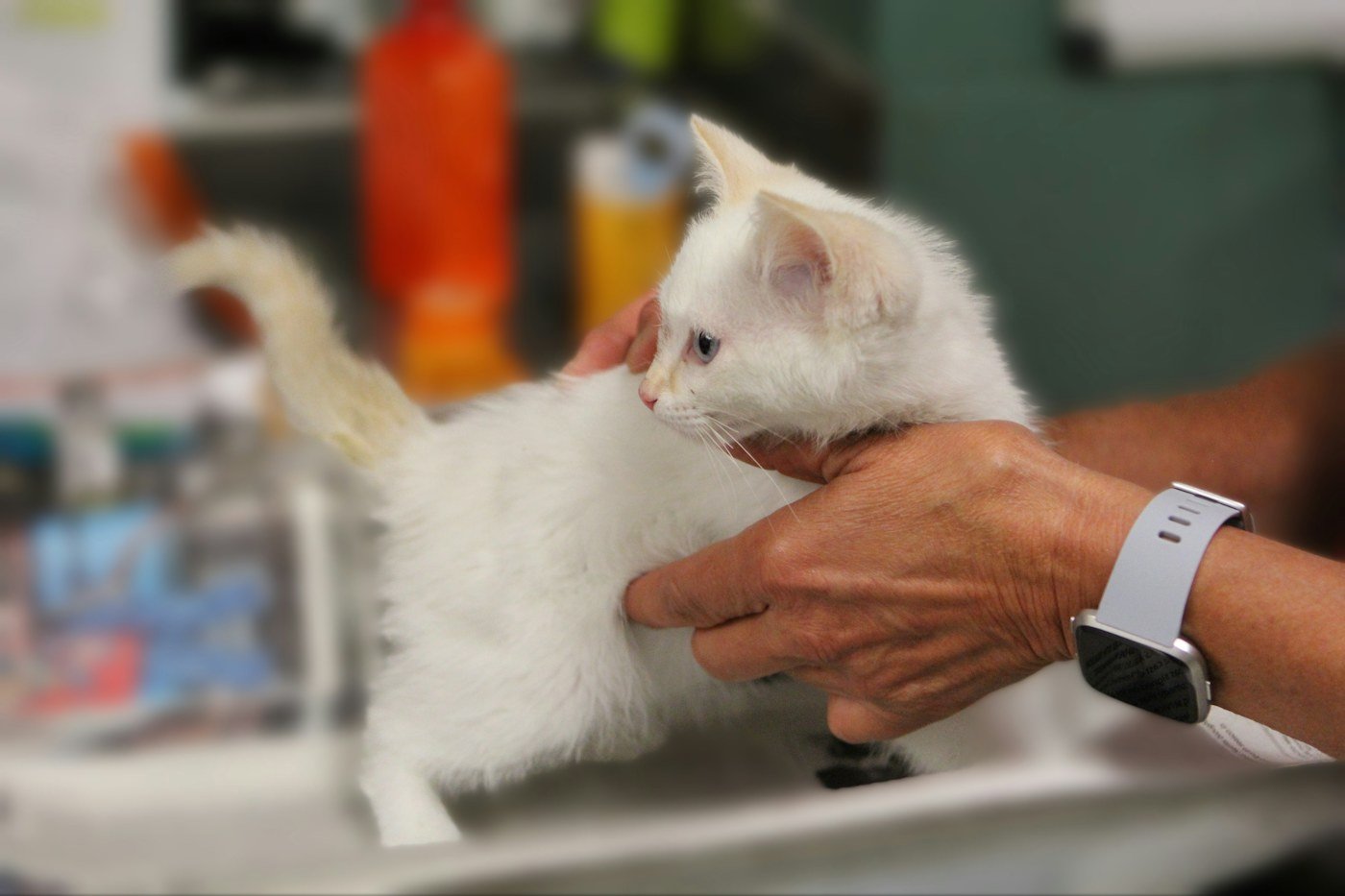
Observation to next step
| What you observe | What to do next |
|---|---|
| One odd reading, but the cat seems normal | Check the scale and method, repeat once, and keep both readings |
| Several readings moving in the same direction | Send the dated log to your veterinary team and ask when the cat should be examined |
| Weight appears stable, but hips, spine, strength, or jumping have changed | Ask for body- and muscle-condition assessment rather than relying on weight alone |
| A planned weight-loss program stalls or moves too quickly | Do not change calories independently; contact the prescribing veterinary team |
| Weight change occurs with not eating, vomiting, diarrhea, lethargy, increased thirst or urination, or another general change | Arrange prompt veterinary care |
Keep the log connected to everyday care
A weight entry becomes more useful when it points to related records. If appetite or meal completion changes, compare it with the routine in One Big Meal or Several Small Meals for an Adult Cat? If drinking or moisture intake seems different, review Wet vs. Dry Cat Food: What Hydration Clues Matter?. If you notice reduced grooming or a changing coat while handling the cat, the observations in How Often Should You Brush a Cat? can add context.
Bring the log to routine visits even when the trend looks steady. A clinic measurement may differ from a home scale, so compare patterns within each method instead of treating two different devices as interchangeable.
When not to wait for the next monthly entry
Cat Friendly Homes, developed by the Feline Veterinary Medical Association, lists an increase or decrease in weight among changes that warrant veterinary attention. Not eating, vomiting, diarrhea, lethargy, increased thirst, and changes in urination are also reasons to contact a veterinarian promptly. If any of these occur, do not wait for the next scheduled home weigh-in.
The simplest useful routine is: same scale, same method, dated note, and action on a real trend. The goal is not to diagnose your cat at home. It is to notice change earlier and give the veterinary team better information.
Sources and further reading
- World Small Animal Veterinary Association: Global Nutrition Guidelines and Nutritional Toolkit — body condition assesses fat stores; muscle condition assesses muscle and can change with disease or aging.
- 2021 AAFP Feline Senior Care Guidelines — serial weight, body-condition, and muscle-condition trends; home monitoring; proportional change in smaller cats.
- Feline Veterinary Medical Association, Cat Friendly Homes: Signs & Symptoms — weight change and accompanying signs that warrant veterinary attention.
Sources checked October 14, 2026. This article provides general educational information and has not received individual veterinary review. Follow your veterinarian’s schedule and targets for cats with illness, medication changes, growth, pregnancy, or an active weight-management plan.
Photo credits: Featured image by Shawn Rain; body images by Maria Teneva and Judy Beth Morris. All via Unsplash under the Unsplash License. These are illustrative stock photographs and do not depict Ruby, Loki, or Coco.