Short answer: most healthy cats do not need a bath on a fixed schedule. Their normal self-grooming handles much of the routine work. A bath becomes useful when there is a clear reason—such as widespread dirt or a confirmed non-toxic sticky substance—not simply because another month has passed.
The first decision is therefore not “How often?” It is “What am I trying to remove, and is bathing the safest way to remove it?” A dusty patch may need only a damp cloth. A suddenly greasy, matted, or poorly groomed coat may need a veterinary conversation before it needs shampoo.
Healthy coat, no calendar bath
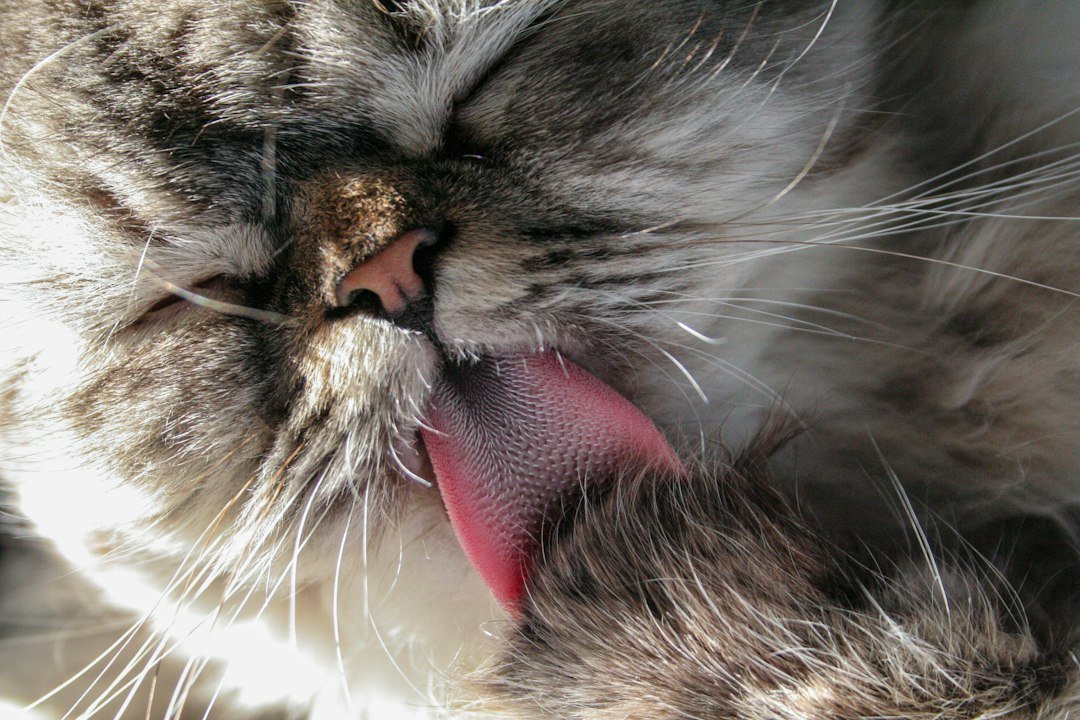
The ASPCA’s cat-grooming guidance notes that cats are well equipped to manage their own hair care and describes bathing as something that may be needed when a cat is very dirty or has encountered something sticky or smelly. That is a reason-based approach, not a weekly or monthly rule.
For an ordinarily clean coat, start with observation and brushing. Look for tangles, dandruff, skin redness, parasites, sore spots, or a change in how much the cat grooms. Our coat-and-tolerance brushing guide explains how to adjust brushing to the coat in front of you instead of following a rigid timetable.
Choose the method from the reason
| What you notice | Best first step | Why |
|---|---|---|
| Coat looks and smells normal; cat is grooming normally | No bath. Inspect and brush as tolerated. | There is no problem for water and shampoo to solve. |
| Small patch of dry dust or food on otherwise normal fur | Try a soft damp cloth, then dry the area. | Spot cleaning avoids turning a local problem into a full-body procedure. |
| Widespread dirt or a confirmed non-toxic sticky or smelly substance | A careful bath may be reasonable. | The material cannot be removed adequately with a local wipe or brush. |
| Unknown chemical, paint, cleaner, essential oil, or topical product on the coat | Prevent licking and call a veterinarian or animal poison service before improvising. | The substance—not the dirt—is the main risk, and the correct decontamination method depends on what it is. |
| Suddenly greasy, matted, unkempt coat or a new reduction in self-grooming | Contact your veterinary clinic. | The coat change may reflect pain, mobility limits, dental disease, skin disease, or another health problem; a bath cannot identify the cause. |
| Veterinarian-prescribed medicated shampoo | Follow the exact product, contact time, frequency, and rinsing instructions. | Medical bathing is treatment, not ordinary grooming. |
This table deliberately separates cleaning from diagnosis. Cornell’s guidance for older cats says a sudden lack of grooming may signal a health problem. Cornell also notes that excessive licking, hair loss, or skin damage is abnormal and can worsen irritation or infection. In either direction, a meaningful grooming change deserves attention rather than repeated bathing.
A completed example: spot clean or full bath?
This is a hypothetical example, not an experience involving Ruby, Loki, or Coco.
What happened: Poppy, a fictional adult cat, rubs against a dusty storage shelf. A dry gray patch is visible across one shoulder. The material is ordinary household dust, not a chemical or pest-control product. Her coat is otherwise normal, and she is eating, moving, and grooming as usual.
Decision: Her person first uses a soft dry cloth, then a slightly damp cloth on the remaining patch. The area is dried with a towel. A full bath is unnecessary because the problem is small, identified, and removable locally.
What would change the decision: If the material were unknown, strongly scented, oily, irritating, or likely to be licked, the next step would be a call for professional guidance—not a guess with dish soap or human shampoo. If Poppy’s coat became greasy without an exposure and she stopped grooming, the next step would be a veterinary appointment.
If a bath is truly needed, prepare before bringing the cat in
A short, organized bath is easier than searching for supplies while a wet cat tries to leave. Set up the room first:
- a non-slip rubber mat or folded towel for secure footing;
- lukewarm water prepared before the cat enters;
- a shampoo specifically labeled for cats, unless a veterinarian prescribed something else;
- a washcloth for the face rather than pouring water over the head;
- two dry towels within reach; and
- a warm, quiet, draft-free place for drying and recovery.
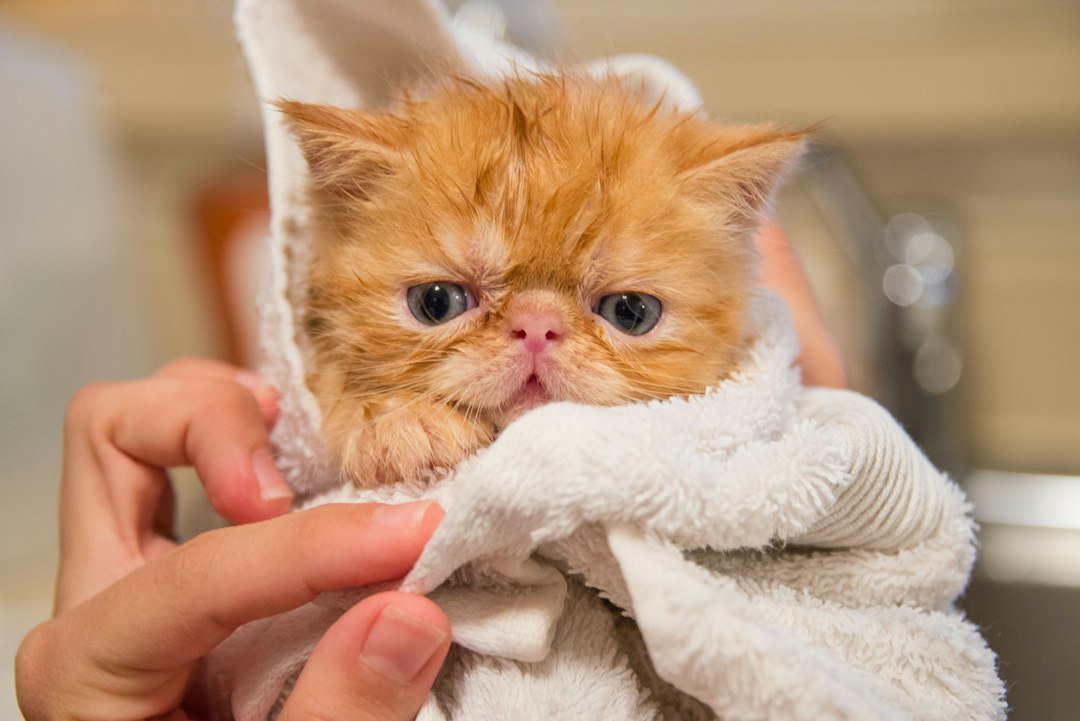
Brush out loose hair and small tangles first if the cat tolerates it. Do not cut tight mats with scissors next to the skin; ask a veterinarian or experienced cat groomer for help. Place the cat on secure footing, wet the body gradually, keep water and shampoo away from eyes and ears, rinse until no residue remains, and towel-dry gently. The ASPCA recommends calm handling, lukewarm water, a rubber mat, and thorough rinsing.
Know when to stop
Pause if the cat becomes increasingly panicked, cannot keep secure footing, pants or breathes with an open mouth, or if continuing would risk a bite, scratch, fall, or escape. A bath is not worth forcing through respiratory distress or escalating fear. Move the cat to a safe, quiet area and contact a veterinary clinic if breathing does not immediately return to normal or if there are other concerning signs.
For a cat who hides after stressful events, the observation framework in our guide to normal versus changed hiding can help you compare the return to eating, movement, toileting, and normal interaction.
Products matter more than fragrance
Human shampoo, scented household cleaners, essential oils, and improvised flea mixtures are not interchangeable with a cat-labeled shampoo. If the bath is related to fleas or ticks, the U.S. Food and Drug Administration advises matching the product to the pet’s species, life stage, and weight, following the label exactly, and never using a dog-only product on a cat. Ask a veterinarian before using flea or tick products on an older, sick, medicated, pregnant, or nursing cat.
If a cat has been exposed to an unknown substance, first prevent grooming and identify the product if it is safe to do so. Keep the package or photograph the label. The ASPCA’s pet decontamination guidance emphasizes that the appropriate response changes with the material involved. Contact your veterinarian or a recognized animal poison service for case-specific advice.
The practical rule
Do not put a healthy cat on a bath calendar simply because baths feel like routine care. Inspect first. Spot clean small, known messes. Use a carefully prepared bath only when there is a clear cleaning reason. When the coat or grooming behavior changes without an obvious mess, ask what changed in the cat—not what shampoo to buy.
Sources and further reading
- ASPCA: Cat Grooming Tips — self-grooming, when a bath may be needed, and practical bathing steps (accessed October 26, 2026).
- Cornell Feline Health Center: Loving Care for Older Cats — reduced grooming as a possible health change and gentle coat care (accessed October 26, 2026).
- Cornell Feline Health Center: Cats That Lick Too Much — excessive grooming, hair loss, and skin damage (accessed October 26, 2026).
- U.S. FDA: Safe Use of Flea and Tick Products in Pets — species-specific products and label directions (accessed October 26, 2026).
- ASPCA: Pet Decontamination at Home — substance-specific exposure response (accessed October 26, 2026).
This owner-education article is not a diagnosis or a substitute for veterinary care. It was prepared from the cited veterinary and animal-welfare sources and was not individually reviewed by a veterinarian.