Short answer: hiding is normal when a cat chooses a safe spot, still eats, drinks, moves, uses the litter box, and returns to their usual routine. The more useful question is not “How many hours is too many?” but “What changed from this cat’s normal pattern?” A sudden increase in hiding—especially with appetite, movement, breathing, vomiting, or litter-box changes—deserves prompt veterinary attention.
A box after the doorbell rings can be a sensible retreat. Staying under the bed all day after skipping breakfast is a different pattern. This guide helps you tell those situations apart without dragging a cat out or trying to diagnose the cause at home.
Start with the baseline, not a stopwatch
Cats vary. One may nap in a covered bed every afternoon; another may disappear only when visitors arrive. Duration matters, but four other details are often more informative:
- Trigger: Did the hiding begin after noise, guests, cleaning, conflict, construction, or a change in routine?
- Choice: Can the cat leave freely, or do they seem reluctant or unable to move?
- Return: Do eating, drinking, toileting, grooming, movement, and interaction resume normally?
- Companions: Is another cat, dog, person, or blocked route preventing access to food, water, litter, or rest?
Cats often conceal discomfort, and a behavior change can be the first visible clue. Cornell’s feline health guidance lists avoiding a favorite resting place, seeking new hiding places, and changes in eating or sleeping among changes worth discussing with a veterinarian rather than dismissing as “just age.”
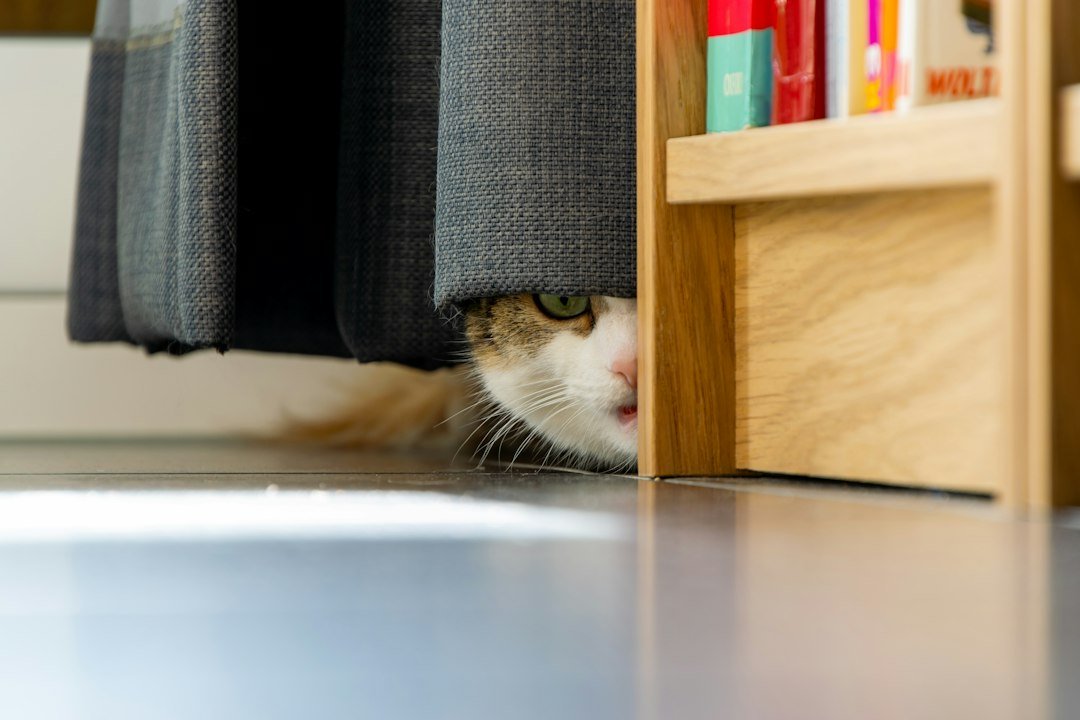
What normal hiding usually looks like
Normal hiding is usually chosen, predictable, and reversible. The cat uses a familiar place after a recognizable event, can be seen shifting position or watching the room, and later resumes ordinary activities. They are not trapped, cornered, or guarding a resource.
A safe place is not a bad habit to eliminate. The Feline Veterinary Medical Association’s environmental-needs guidance treats safe places as a basic feline resource and recommends at least one single-cat safe place per cat, positioned apart in a multi-cat home. That matches the practical goal in our multi-cat resource-planning guide: a retreat works only when another animal cannot quietly block it.
Observation to next step
| What you observe | What it may mean | Reasonable next step |
|---|---|---|
| Usual hiding place after visitors or noise; the cat later eats, toilets, moves, and interacts normally | A predictable retreat from stimulation | Leave the cat undisturbed. Note the trigger and let the cat come out by choice. |
| A new place or longer hiding than usual, but appetite, movement, breathing, and litter use remain normal | A response to an environmental change may be possible | Check for noise, blocked routes, conflict, temperature changes, or moved resources. Monitor closely that day. |
| Hiding plus reduced appetite, less movement or play, reluctance to jump, vomiting, or changed urine/stool habits | Possible pain or illness; hiding alone cannot identify the cause | Contact your veterinary clinic promptly and describe the combined changes and their timing. |
| Open-mouth or labored breathing, collapse, blue-tinged gums, repeated attempts to urinate with little or no urine | Potential emergency | Go to an emergency veterinary service now; call ahead if possible. |
Those emergency examples are specific for a reason. Cornell notes that any cat showing breathing difficulty is at high risk if it is not treated promptly. The American Veterinary Medical Association warns that straining with little or no urine can mean a blocked urethra, which is life-threatening and requires immediate treatment.
A completed example: the pattern makes the decision
This is a hypothetical example, not an experience involving Ruby, Loki, or Coco.
Mina’s baseline: When a delivery arrives, Mina goes behind the sofa for about 45 minutes. She watches from the edge, comes out for her next meal, uses the litter box, and plays that evening.
Today’s change: No visitor or loud event occurred. Mina has stayed under the bed for eight hours, left breakfast untouched, and will not jump onto a low chair she normally uses.
Next step: Her person calls the veterinary clinic the same day and reports the timeline, missed meal, hiding location, and movement change. They do not assume the solution is simply a better hiding bed, and they do not pull her out for a home “pain test.”
This example shows why there is no universal hiding-time cutoff. Three linked changes carry more information than the clock alone.
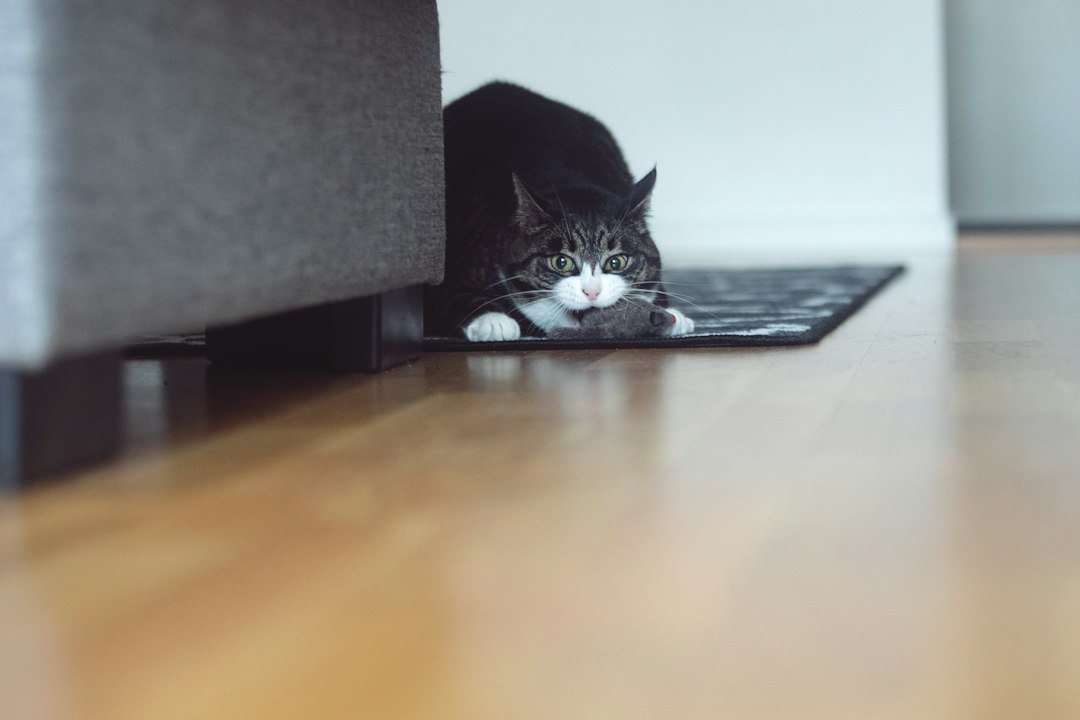
Make safe places useful, not isolating
A good retreat lets a cat reduce contact while still controlling what happens next. Useful options include a sturdy cardboard box on its side, a covered bed, a carrier left open in a quiet area, or an elevated perch with a stable route up and down. Offer more than one type when space allows.
- Place retreats away from busy doorways, appliances, and ambush points.
- Keep food, water, litter, scratching, and resting resources accessible without forcing one cat past another.
- Do not block the exit, reach in repeatedly, or drag the cat out for social contact.
- Choose stable materials without loose strings, collapsing gaps, or handles that could catch a collar or limb.
- For an older cat or one with limited mobility, add a low-entry option and an easy route to essentials.
Our resting-spots guide can help you compare locations, while the carrier guide shows how to make a carrier a familiar choice rather than a last-minute trap.
Record one ordinary day and one changed day
You do not need a complicated tracker. A short note gives a veterinarian more useful context than “she seems off.” Record:
- time the hiding began and any likely trigger;
- location and whether the cat could leave freely;
- food and water offered and what was actually consumed;
- urine and stool observations, including repeated unproductive litter-box visits;
- walking, jumping, grooming, play, breathing, and interaction changes;
- photos or short video of unusual movement or breathing, only if recording does not delay urgent care.
If body-weight change is also a concern, use the same scale and conditions described in our home weight-trend guide. A trend can support the history you give your veterinarian; it cannot replace an examination.
The practical rule
Respect ordinary hiding. Investigate a changed pattern. Call your veterinarian when hiding arrives with another change, and seek emergency help for breathing difficulty, collapse, or unproductive straining to urinate. The aim is not to stop a cat from having privacy—it is to notice when privacy has become part of a larger health or access problem.
Sources and further reading
- Feline Veterinary Medical Association: Your Cat’s Environmental Needs — safe places and separated resources (accessed October 23, 2026).
- AAFP and ISFM Feline Environmental Needs Guidelines — the five pillars of a healthy feline environment (accessed October 23, 2026).
- Cornell Feline Health Center: Loving Care for Older Cats — behavior changes, hiding, eating, and sleep (accessed October 23, 2026).
- Cornell Feline Health Center: Dyspnea (Difficulty Breathing) — emergency respiratory signs (accessed October 23, 2026).
- American Veterinary Medical Association: Feline Lower Urinary Tract Disease — straining and urinary obstruction (accessed October 23, 2026).
This owner-education article is not a diagnosis or a substitute for veterinary care. It was prepared from the cited veterinary and animal-welfare sources and was not individually reviewed by a veterinarian.