Short answer: many cats wake people before dawn because cats are naturally more active around dawn and dusk, and the routine can become stronger when waking a person reliably produces breakfast, play, conversation, or movement. The useful response is not punishment. It is to identify what follows the wake-up, move food and play cues away from the bedroom, and change one part of the pattern at a time.
A new pattern of nighttime vocalizing or restlessness is different. If it begins suddenly—especially in an older cat—or appears with appetite, thirst, litter-box, mobility, vision, hearing, or orientation changes, arrange a veterinary assessment rather than assuming it is only a habit. The AAHA/AAFP feline life-stage guidance notes that new behavior in senior cats should be evaluated for medical causes.
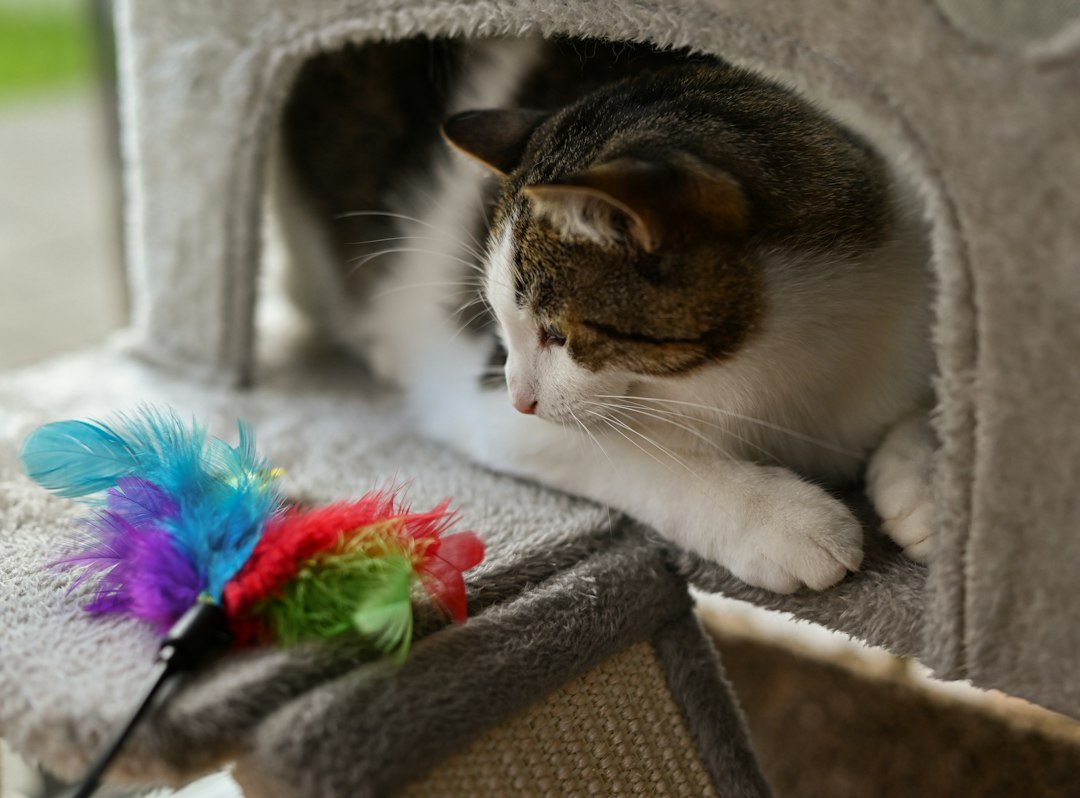
First, separate a predictable routine from a health change
Cats are often described as crepuscular: they tend to show more activity around dawn and dusk. Cornell’s What to Expect When Adopting a Cat guide explains that this rhythm can include waking a caregiver to play. That does not mean every 4:30 a.m. wake-up is inevitable, or that every nighttime sound is behavioral.
Before changing the routine, write down what has changed. Is the cat simply arriving at the usual time and asking for the usual reward? Or is there pacing, confusion, distressed vocalizing, a changed gait, more drinking, less eating, missed litter-box trips, or difficulty settling? Cornell’s overview of feline cognitive dysfunction lists altered sleep–wake cycles and nighttime vocalization among possible signs in older cats, while also stressing that physical causes must be considered.
Match the observation to the next step
| What you observe | What may be maintaining it | A practical next step |
|---|---|---|
| The cat wakes you, then receives breakfast immediately | Waking has become a reliable food cue | Keep the daily ration unchanged, but deliver a measured portion with a timed feeder before the usual wake-up. Move the feeder away from the bedroom and shift its time gradually. |
| The cat brings a toy, pounces on feet, or races around | Unmet play opportunity at the time the cat is alert | Add a short interactive play session in the evening. Let the cat stalk, chase, and capture the toy, then put string or wand toys away safely. |
| One cat waits while another guards the feeder or doorway | Competition or blocked access in a multi-cat home | Offer food and other key resources in separated locations. Watch each cat individually rather than assuming every cat can reach the same station. |
| The behavior is new, distressed, or accompanied by physical or orientation changes | A health, pain, sensory, or cognitive issue may be involved | Record the timing and accompanying signs, then contact a veterinarian. Do not wait for a training plan to solve a possible medical change. |
A four-part evening and morning plan
1. Schedule play before the quiet part of the evening
The Feline Veterinary Medical Association’s training guidance for unwanted behavior recommends interactive play at least twice daily, including a session in the evening, and rewarding calm behavior rather than waiting for the unwanted behavior to start. Use a toy that stays at a safe distance from hands and feet, allow successful captures, and end while the cat is still engaged rather than pushing to exhaustion.
If you want a simple way to compare toy types and stop signals, see our cat play observation guide. For safe storage after the session, use the wand-toy play-and-put-away routine.
2. Decouple breakfast from your body getting out of bed
If food arrives the moment you stand up, your movement becomes part of the breakfast signal. A timed feeder can move that signal away from you. Set it to release a measured portion shortly before the cat’s usual waking attempt, then move the time later in small steps as the pattern becomes steadier. Count that portion within the cat’s normal daily food allowance; it is not an extra meal.
The FelineVMA consensus statement on how to feed cats supports frequent small meals, food puzzles, automatic feeders, and individualized plans that let cats express hunting and foraging behavior. Our guide to adult-cat meal frequency can help you divide a daily ration without simply adding calories.
3. Reinforce the quiet behavior you want
Attention can be a reward even when it sounds like “stop.” Avoid shouting, spraying water, chasing, or turning the event into a game. Instead, make the target routine predictable: calm attention and breakfast happen after the chosen morning cue, such as the alarm, while the timed feeder handles any earlier measured portion. If ignoring the cat would create a safety problem, calmly redirect to an appropriate resting, feeding, or play location and adjust the environment for the next night.
4. Make the plan work for every cat in the home
A single feeder may not be a neutral solution in a multi-cat household. The FelineVMA’s 2026 environmental-needs guidance recommends separated resources and individual play opportunities when cats share a home. Place food stations where one cat cannot block the only route, and confirm that the intended cat actually receives the timed portion. Our multi-cat resource planning guide shows how to map access rather than just count bowls.

Completed example: a hypothetical seven-night adjustment
This is a fictional example, not an account of Ruby, Loki, or Coco. Milo is a healthy adult cat who has been waking his caregiver at 4:45 a.m. and receiving food at 4:50. The household alarm is 6:30. A three-day note shows the same sequence each morning and no new physical or litter-box changes.
| Night | Planned change | What the caregiver records |
|---|---|---|
| 1–2 | Five-minute wand play at 9:20 p.m.; a measured portion of the daily ration in a feeder at 4:40 a.m. | First wake-up time, whether Milo goes to the feeder, and any repeated bedroom visits |
| 3–4 | Keep play and total food the same; move feeder to 4:55 a.m. only if Milo is settling without distress | First wake-up time and feeder response; do not mark the plan “failed” after one variable night |
| 5–7 | Move feeder another 10–15 minutes later if the prior step is stable; calm social attention begins after the alarm | Earliest sustained improvement, setbacks, appetite, litter-box use, and any unusual vocalization or pacing |
If Milo became disoriented, stopped eating, drank or urinated more, appeared painful, or developed a new persistent vocalization, the correct next step would be veterinary advice—not moving the feeder again. Likewise, a cat with a medical diet, diabetes, medication schedule, weight-loss plan, or other health condition needs an individualized feeding plan from the veterinary team.
What success looks like
Success is not necessarily a cat sleeping motionless until the alarm. A more realistic goal is that the cat has appropriate food, play, and resting options; early activity no longer depends on waking a person; and the caregiver can distinguish a familiar request from a meaningful change. Track the first wake-up time, what happened immediately before it, what response followed, and any health-related signs for one week. That small record gives you something concrete to adjust—or to show your veterinarian.
Sources and further reading
- Feline Veterinary Medical Association: Training Techniques for Addressing Undesirable Behaviors
- Feline Veterinary Medical Association: How to Feed a Cat—Consensus Statement
- FelineVMA: Meeting the Environmental Needs of Cats (2026)
- Cornell Feline Health Center: What to Expect When Adopting a Cat
- AAHA/AAFP Feline Life Stage Guidelines: Behavior and Environmental Needs—Senior Cats
- Cornell Feline Health Center: Cognitive Dysfunction
Sources checked October 28, 2026. This educational article was not individually reviewed by a veterinarian and does not replace veterinary diagnosis or treatment.