Short answer: do not trim or pluck a cat’s whiskers. They are specialized tactile hairs that help a cat collect information about nearby objects and movement. If one or two whiskers are accidentally cut, the missing length is not usually an emergency by itself—but leave the remaining whiskers alone, keep the cat’s surroundings predictable, and check whether the skin or face was also injured.
This guide separates four situations that can look similar at first: a clipped whisker, a naturally shed whisker, a whisker pulled from the follicle, and a wider facial injury. It is general education, not a diagnosis of an individual cat or an account of Ruby, Loki or Coco.
Why a whisker is more than long fur
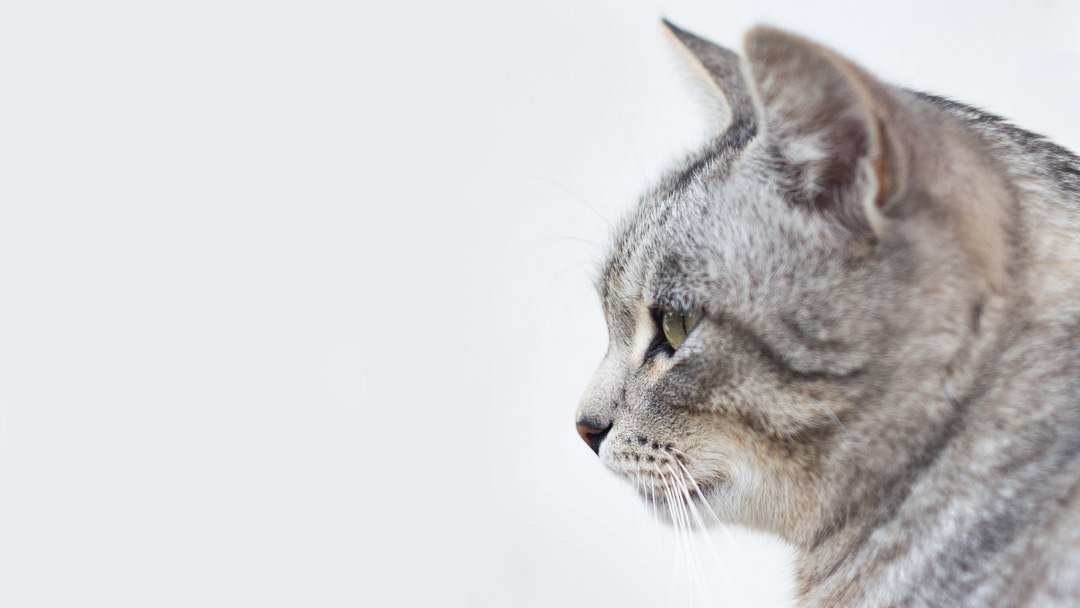
Whiskers, or vibrissae, are specialized tactile hairs. A 2026 veterinary reference chapter describes them as structures that monitor the environment and channel sensory information to the nervous system. VCA explains that the hair itself responds to touch and changes in nearby air movement while nerves in the follicle carry that information onward. This can support close-range navigation, hunting and protective responses around the eyes. See the veterinary reference chapter on vibrissae and VCA’s overview of whisker function.
The practical conclusion is simple: a whisker is useful where it is. There is no grooming benefit to making whiskers even, matching them to the coat, or removing a bent-looking one. When brushing the face, work gently and do not pull a comb through the whiskers. Our cat-coat brushing guide uses the cat’s tolerance and coat condition—not a fixed cosmetic result—to set the pace.
Cut, shed, pulled or injured: choose the next step
A cut hair shaft and an injured follicle are not the same event. VCA’s current caregiver material also makes a useful correction to a common myth: losing whiskers does not automatically mean a cat will become ill or unable to balance. That does not make intentional trimming worthwhile; it means the response to an accident should be calm and proportionate. Compare VCA’s myth-checking guidance with its recommendation to avoid cutting or pulling whiskers.
| What you find | What it may mean | Useful next step |
|---|---|---|
| One loose whisker on bedding, with no skin change | Whiskers can shed naturally, as other hairs do. | Remove it from the bedding and observe normally. Do not pull on neighbouring whiskers to “check” them. |
| A blunt, shortened end after grooming or scissors | The shaft has been cut; the follicle may be intact. | Stop trimming. Keep familiar routes clear and watch the cat’s ordinary movement, eating and behaviour. |
| A whisker was pulled, or the skin is bleeding or swollen | The follicle or nearby tissue may have been injured. | Do not probe the area. Contact a veterinarian for advice, especially if pain, discharge or swelling is present. |
| Many whiskers are breaking or disappearing, or the face has hair loss or sores | This is a pattern, not a single stray hair. | Photograph the area and arrange a veterinary assessment rather than changing grooming products repeatedly. |
| Whisker loss follows a fall, bite, burn or other facial trauma | The visible whisker change may be the least important part of the injury. | Seek prompt veterinary advice and describe the whole event, not only the whiskers. |
What to do after an accidental trim
- Put the scissors or clippers away. Do not shorten the other side to make the face look even.
- Check without pulling. Look for a cleanly shortened shaft versus blood, swelling, a burn or a skin wound.
- Keep the environment familiar. Leave furniture, steps and routine walking routes where they are while you observe.
- Record changes, not assumptions. Note reluctance to jump, bumping into familiar objects, facial sensitivity, appetite changes or unusual hiding.
- Call the clinic when the event involved more than hair. A wound, pain, swelling, discharge, eye injury, burn, fall or bite deserves individual veterinary advice.
Hypothetical example—not an observation of Ruby: a caregiver clips one whisker while removing a small patch of tangled cheek fur. There is no blood, heat, swelling or eye contact, and the cat walks and eats normally. The next step is to stop trimming, record what happened and monitor. If the scissors nicked the skin, the cat resists facial touch, or behaviour changes, the next step changes to contacting the veterinary clinic.
Do not use a bowl trial as a diagnosis
Cat Friendly Homes, a Feline Veterinary Medical Association resource, notes that some cats may dislike pressure on their whiskers while eating or drinking and suggests trying a wide, shallow dish when this seems relevant. That is a low-risk choice test, not proof of a condition called “whisker stress.” The useful question is whether the cat eats and drinks more comfortably from one clean, stable setup. Read the exact Cat Friendly Homes handling and sensory guidance.
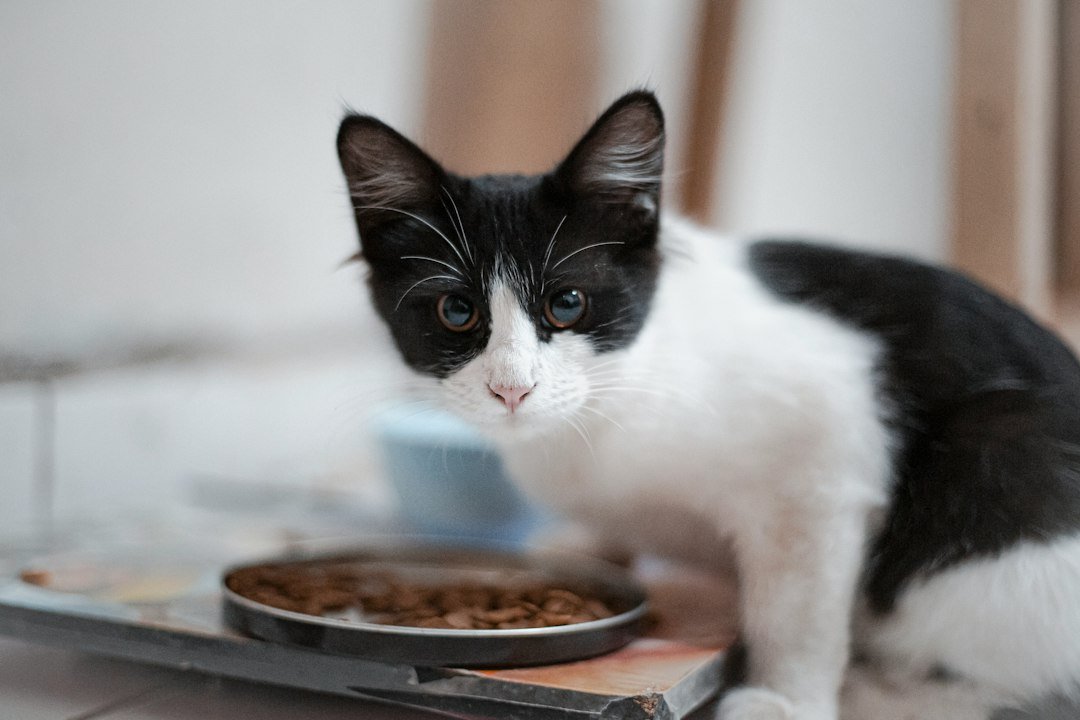
Change one variable at a time: for example, offer the usual food in a wider dish in the usual location. Keep the food, portion and timing the same. Record whether the cat approaches, eats a normal amount and returns at the usual time. Clean water containers daily using the steps in our water-bowl cleaning guide. A reduced appetite, difficulty eating, drooling, facial pain or weight loss needs veterinary attention rather than a series of bowl experiments.
A one-minute whisker and face check
Use this only when your cat is relaxed and accepts a nearby visual check. Do not restrain the head to complete the list.
- Both sides: any new obvious asymmetry, widespread breakage or missing patches?
- Skin: redness, swelling, crust, discharge or a visible wound?
- Eyes and nose: squinting, tearing, bleeding or discharge?
- Eating: normal approach, chewing and amount?
- Movement: ordinary routes, jumps and confidence in familiar rooms?
A photo taken from the same distance can help a veterinarian see change over time. Avoid repeatedly touching a sore area for comparison. If a cat is frightened by the check, stop; handling should not become another source of distress. For gradual, choice-based handling practice, the same “return to an easier step” principle in our carrier-training guide applies.
The practical rule
Leave intact whiskers intact. A single accidental cut is different from pulling a whisker, damaging the skin or seeing a repeated pattern of loss. Observe the whole cat—face, appetite, movement and behaviour—then match the next step to what actually happened. Cosmetic symmetry is never a reason to remove more sensory hair.
Sources and further reading
- Grace SF. “Vibrissae.” The Feline Patient, 6th ed. (first published December 19, 2025).
- VCA Animal Hospitals: Functions of cat and dog whiskers.
- VCA Animal Hospitals: How well do you know your cat?.
- Cat Friendly Homes / Feline Veterinary Medical Association: How to keep your cat calm.
Sources and guidance checked November 27, 2026. This article provides general cat-care education and has not received individual veterinary review. Contact your veterinarian for advice about a specific injury, skin change, appetite problem or behaviour change.