A water bowl is easy to walk past. The useful question is not whether you own the perfect bowl, but whether today’s water has been checked, the bowl has been washed, and someone knows who is doing the next refill.
This cat water bowl checklist separates three small jobs: looking at the station, cleaning it, and writing down anything worth noticing. It is a household routine, not a hydration test or a record of Ruby’s personal drinking habits.
Start with the bowl, not a shopping list
Cornell’s Feline Health Center recommends keeping fresh water available in easily accessible places and checking that other pets are not preventing access. Start there before buying new equipment. Read Cornell’s hydration guidance.
- Name each station. Try simple labels such as “hallway bowl” and “living-room bowl” so everyone means the same place.
- Give it a quick look. Is there water in it? Is there visible hair, food or other debris? Is the mat wet? Note what actually needs attention.
- Check the route. Look for a closed door, a storage box or another everyday obstruction between the cat and the water.
- Make the job easy to hand over. Write down where clean spare bowls are kept and who will check the stations later.
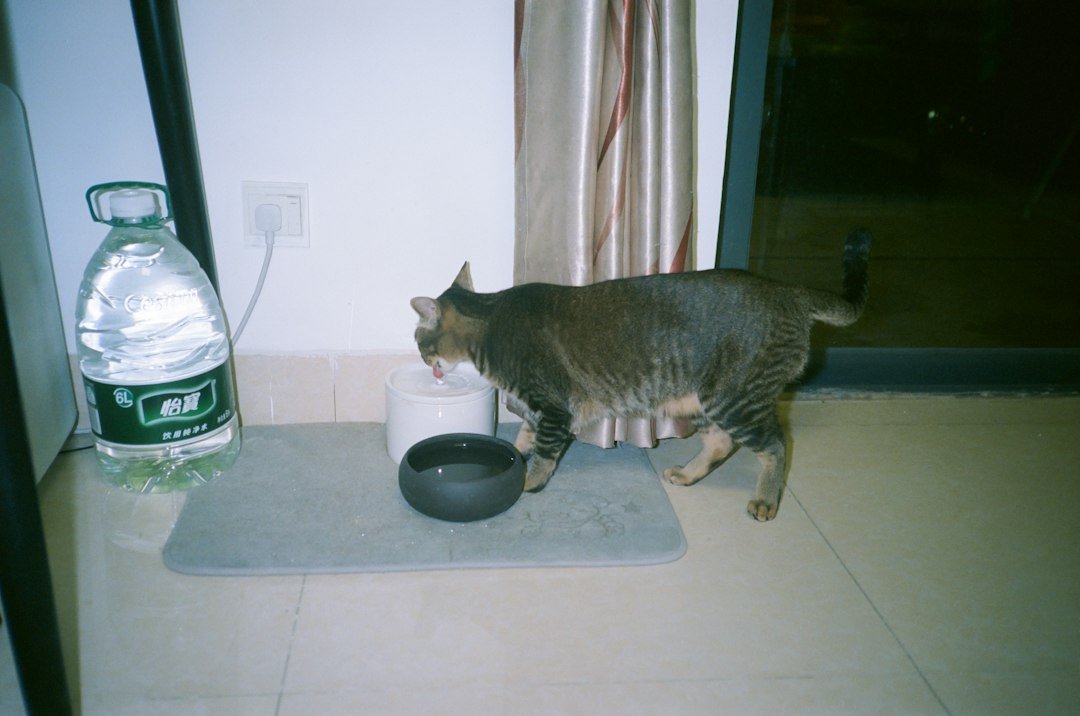
If several cats share your home, use our multi-cat household checklist to think about access for each individual. Two containers beside each other are still one location on your household map.
A daily wash-and-refill routine
The FDA recommends washing water bowls daily. A top-up and a wash are different jobs, so give them separate boxes on your checklist. See the FDA’s pet-bowl guidance.
- Keep another water option available while a bowl is being cleaned; a clean spare makes the swap straightforward.
- Empty and wash the bowl daily. Follow the bowl manufacturer’s cleaning instructions, including whether it is dishwasher-safe. Rinse away any cleaning product before refilling.
- Check the bowl and its base. Look for damage, residue and spills instead of treating clear-looking water as a completed cleaning check.
- Refill with fresh drinking water and return the bowl to its usual station.
- Record the wash, not just the refill. A time and initials are enough when more than one person helps.
Put the daily wash beside an existing household reminder rather than creating a complicated new system. For example, your reminder could read “water bowls: wash, refill, sign.” Keep the water task separate from the food-storage steps in our shelf-to-bowl food routine.
Does a fountain change the routine?
Some cats drink more when offered a fountain, but preferences vary, according to Cornell. A fountain is an option to observe, not a guaranteed upgrade for every cat.
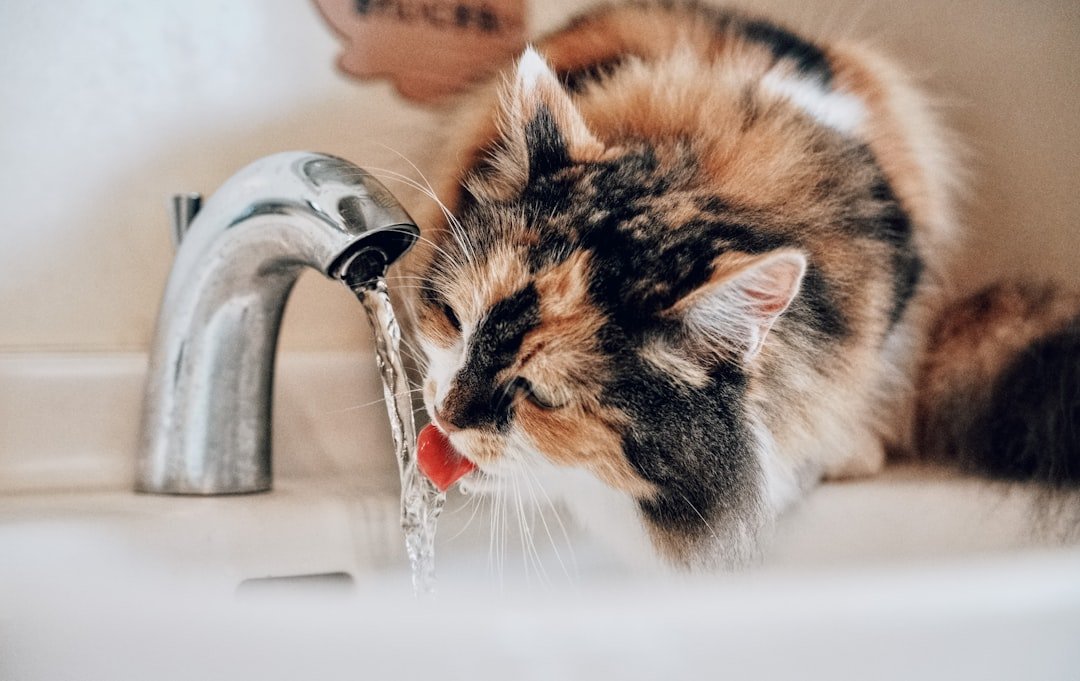
If you already use a fountain, keep its instructions with the household checklist. Write down the model’s cleaning procedure, the parts that need attention and its filter-replacement guidance. Do not invent a universal replacement interval from somebody else’s device.
A practical fountain handover has three entries: “checked today,” “cleaned on,” and “next manufacturer-directed maintenance.” Keep an ordinary bowl available if the fountain is being cleaned or is not working. The equipment pictured here has not been tested by Ruby Cat Life.
Copy this water-station record
Use one short entry per station. There is no score to achieve and no requirement to watch your cat all day. The purpose is to make the household work visible and leave room for an honest “not seen.”
- Date and station: ____________________
- Daily wash completed — time / initials: ____________________
- Fresh water checked or refilled — time / initials: ____________________
- What I actually saw: drinking / approaching then leaving / spill / debris / not observed
- Which cat, if known: ____________________
- Context worth noting: a moved bowl, closed door, different food, fountain switched off, or another specific change
- Next practical action and person responsible: ____________________
Example only: “Hallway bowl, 7:30 a.m.: washed and refilled, AB. Evening check: wet mat; did not see which cat visited. Next action: dry the area and check whether the bowl rocks.” This is a made-up entry to demonstrate the form, not an incident involving Ruby, Loki or Coco.
What your notes can—and cannot—tell you
Cats get water from food as well as drinking. A cat eating wet food may drink less from a bowl than one eating dry food, so bowl visits alone are not a complete intake record. Cornell explains the distinction.
“I saw a drink” and “I did not see a drink” are observations, not conclusions about how much water a cat consumed. In a shared household, a lower water level cannot identify which cat drank it. Spills also make a refill total a poor stand-in for an individual cat’s intake.
If your veterinarian asks you to measure drinking, ask for a method suited to your household. Do not restrict access to water to make the numbers easier to collect.
When the checklist is not enough
Contact your veterinarian promptly if you suspect dehydration, especially with lethargy, weakness or poor appetite. Bring your notes, but do not wait to finish a log before seeking help. Cornell’s hydration page describes these warning signs and the need for veterinary assessment.
Ask your veterinarian about a new or persistent change in drinking, too. This guide cannot diagnose its cause or replace an individual care plan. The aim is a dependable daily routine, with useful observations ready when professional advice is needed.
Sources and further reading
- Cornell Feline Health Center: Hydration — water access, food moisture, fountain preferences and signs requiring veterinary attention.
- U.S. Food and Drug Administration: Proper Storage of Pet Food & Treats — includes the recommendation to wash water bowls daily.
- Ruby Cat Life: A Multi-Cat Home Checklist — individual access and household observation.
- Ruby Cat Life: Cat Food Storage — the companion shelf-to-bowl routine.
Sources and photo permissions checked on 25 September 2026. The checklist and example are original Ruby Cat Life educational tools.
Photo credits
Featured photograph: Photo: Carolien van Oijen / Unsplash · Unsplash License. Body photographs are credited in their captions. All three are illustrative stock photographs, not photographs of Ruby, Loki or Coco. Their inclusion does not endorse any pictured brand or equipment.