Short answer: raw meat, raw milk and raw animal-based pet foods add pathogen risks that cooked or properly heat-treated foods are designed to reduce. The CDC does not recommend feeding raw pet food to cats, and current FDA guidance asks owners to consider H5N1 as an additional reason to avoid uncooked animal products.
“Raw” is a processing description, not proof that a food is fresher, safer or nutritionally complete. A package can be commercially made, frozen or freeze-dried and still contain animal protein that has not received a validated kill step. The practical question is not whether the package looks premium. It is whether the food is complete for your cat’s life stage and what process the manufacturer uses to control bacteria and viruses.
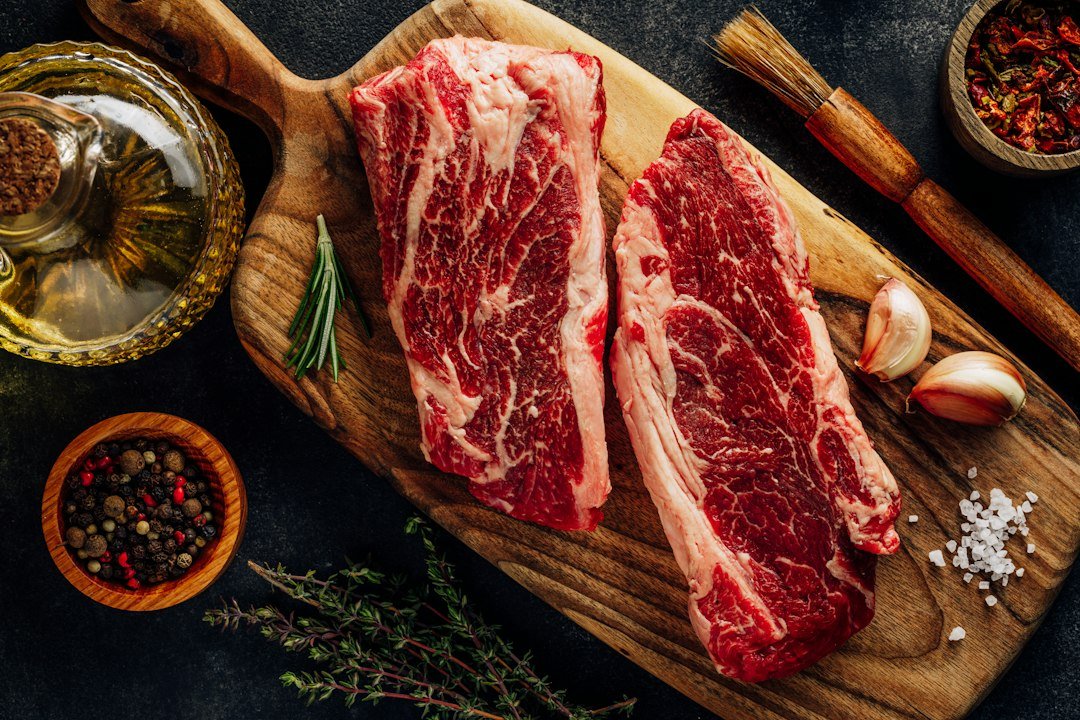
What “raw” can mean on a package
The CDC’s pet-food safety page defines raw pet food as food containing uncooked animal protein that has not been heated enough to kill germs. It also notes that some companies use high-pressure processing or irradiation, but the CDC still treats these products as raw because there is not enough information about how consistently facilities use those processes.
| Food description | What you can conclude | What still needs checking |
|---|---|---|
| Cooked, canned or heat-treated | A heat step is intended to reduce pathogens | Is it complete and balanced for the correct life stage? |
| Commercial frozen raw | It is sold as a finished product, but freezing is not the same as cooking | What validated pathogen-control process is used? |
| Freeze-dried raw | Moisture has been removed; the word “raw” still matters | Was there a validated kill step, and what handling does the label require? |
| Homemade raw meat mixture | The ingredients and kitchen process are controlled at home | Both pathogen control and nutritional adequacy need veterinary guidance |
| Raw milk or raw egg added as a topper | The portion may be small, but it is still an uncooked animal product | Why add the exposure when the cat’s complete diet should already meet its needs? |
H5N1 changed the risk conversation
The FDA’s pet-food manufacturer update, reissued September 30, 2025, identifies H5N1 as a known or reasonably foreseeable hazard for covered manufacturers using uncooked or unpasteurized poultry- or cattle-derived ingredients. The agency reports that cats can become severely ill or die after consuming contaminated unpasteurized milk, uncooked meat or raw pet food that has not received an effective inactivation step.
The CDC’s bird-flu guidance for pet owners says not to feed raw pet food or unpasteurized milk. This is not a claim that every raw package contains H5N1. It is a reason not to treat “commercial,” “frozen,” “natural” or “premium” as a safety guarantee.
The ordinary pathogen risk did not disappear
H5N1 is not the only concern. The American Veterinary Medical Association’s current raw-diet policy discourages feeding raw or undercooked animal-sourced proteins because contaminated foods can affect cats, other animals and people. The policy lists organisms including Salmonella, Campylobacter, E. coli and Listeria, and notes that an apparently healthy pet can still carry organisms that pose a risk to others.
That household risk matters when food touches hands, counters, bowls, floors or another pet’s feeding area. It is especially important around young children, older adults, pregnant people and anyone with a weakened immune system. A clean-looking bowl and a cat without symptoms do not prove that the handling route was free of pathogens.
Read the package in five passes
| Pass | Exact question | Useful evidence |
|---|---|---|
| 1. Purpose | Is this a complete diet or only a topper/treat? | A clear nutritional adequacy statement, not front-label marketing |
| 2. Life stage | Is it formulated for this cat’s life stage? | The stated life stage matches the individual cat |
| 3. Processing | Does the label say raw, uncooked, unpasteurized, frozen raw or freeze-dried raw? | A plain description of what was and was not heat-treated |
| 4. Pathogen control | What validated step reduces bacteria and viruses? | A specific process and verification answer from the manufacturer |
| 5. Traceability | Can you identify the maker, lot and best-by date? | Contact details and a lot code you can preserve if a recall occurs |
Our cat-food label guide explains how to separate the product name, ingredient list, nutritional adequacy statement and feeding directions. Do not replace that review with a single phrase such as “human grade,” “ancestral” or “minimally processed.”
A completed example: freeze-dried does not answer everything
This is a hypothetical package review, not a product test and not a diet used by Ruby, Loki or Coco.
| Package detail | What it answers | What remains unknown | Next step |
|---|---|---|---|
| “Freeze-dried raw chicken” | The food is marketed as raw and moisture was removed | Whether an effective pathogen-control step was validated | Do not infer safety from freeze-drying alone |
| “Complete and balanced for adult maintenance” | It is presented as a main adult-cat diet | Whether it fits this cat’s medical and calorie needs | Compare with the veterinarian’s plan |
| Lot code and maker contact are visible | The product is traceable | Current recall status and the maker’s verification process | Keep the lot information and ask specific questions |
| No clear kill-step explanation | Nothing | How bacteria and viruses are controlled | Choose a cooked complete diet while the question is unresolved |
If your cat already eats raw food
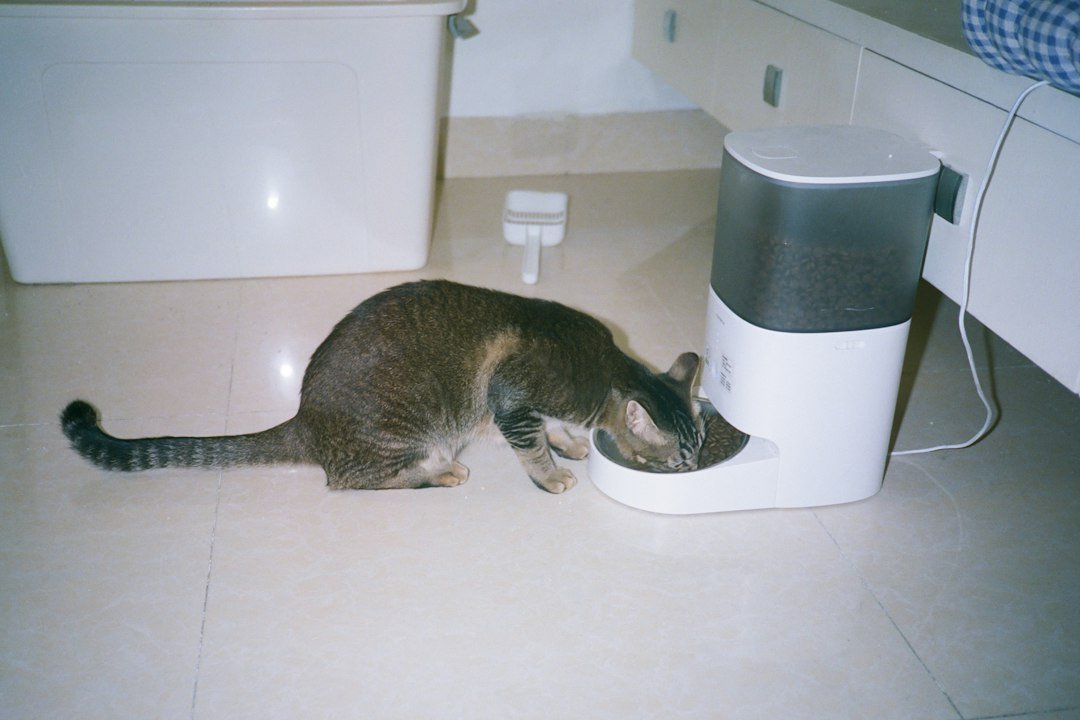
Do not use this article to design a homemade substitute or to make a medically complicated diet change alone. Save the package, lot number and feeding history, then ask your veterinarian for a cooked, complete-and-balanced alternative and a transition plan. Cats with a prescribed diet, chronic illness, poor appetite or a history of diet-related problems need individual advice.
For a healthy cat whose veterinarian recommends changing foods gradually, our food-transition guide shows how to record intake and stool without pretending one fixed schedule suits every cat. Keep opened packages and leftovers according to label directions; our food-storage guide covers dates, containers and discard decisions.
When a raw-food exposure needs a veterinary call
Contact a veterinarian promptly if a cat that has eaten raw animal products develops low appetite, lethargy, vomiting, diarrhea, fever, eye or nasal discharge, breathing difficulty, tremors, poor coordination, seizures or sudden vision changes. Those signs are not specific enough to diagnose H5N1 or another foodborne illness at home. Tell the clinic about the raw-food exposure before arrival so the team can advise you on safe handling and examination.
Until you receive instructions, limit other pets’ and people’s contact with leftover food, vomit, stool and contaminated surfaces. Wash hands after handling food or bowls, clean preparation surfaces, and do not feed the same suspect product to another cat. Keep the original packaging and lot code rather than discarding the evidence.
One decision for a multi-cat household
Do not assume every cat ate the same amount or used the same bowl. Record which food was offered, where each bowl sat, which cat was observed eating and which package lot was open. The individual-observation approach in our multi-cat household guide is more useful than writing “the cats ate it.”
The simplest default is a cooked or otherwise effectively processed food that carries an appropriate complete-and-balanced statement and fits the individual cat. If a raw product’s safety explanation depends on vague words instead of a validated pathogen-control process, that is not a gap you need to accept.
Sources and further reading
- CDC: About Pet Food Safety — raw-food definition, handling and the recommendation not to feed raw pet food.
- CDC: Bird Flu in Pets and Other Animals — H5N1 exposure routes and pet-owner prevention guidance.
- FDA: H5N1 in Pet-Food Safety Plans — manufacturer hazard analysis and heat-treatment context; reissued September 30, 2025.
- FDA: Ways to Reduce HPAI Risk in Cats — owner guidance on uncooked meat, raw milk and clinical warning signs.
- AVMA: Raw Diets for Dogs and Cats — current policy on animal and household pathogen risks.
- WSAVA: Global Nutrition Guidelines — nutrition-selection tools and raw-meat diet risk resources.
Source pages were checked on 25 November 2026. H5N1 guidance can change as investigations develop. This owner-facing educational guide was not presented as veterinary review and cannot diagnose an individual cat.
Featured photograph: illustrative stock photo; not Ruby, Loki or Coco, and not a product test. Photo by Ayhan Jibrael on Unsplash, used under the Unsplash License.