Short answer: usually, no. If you need to change litter, keep the familiar option available and offer the new substrate in a second, comparable box. That turns a stressful all-or-nothing switch into a simple preference test—and gives you clearer information about what your cat will actually use.
This is not about letting a cat “win” a battle of wills. Texture, scent, depth, box shape, cleanliness, location, mobility, and health can all change litter-box behavior. The Ohio State University Indoor Pet Initiative specifically recommends placing a box with the new litter next to the old box so the cat can choose. Cornell’s Feline Health Center also notes that sudden brand changes may trigger avoidance and advises gradual change when a switch is necessary.
Why an all-at-once switch gives you poor information
If the only box changes overnight, several variables may shift at once: smell, grain size, how the litter feels under the paws, how deeply the feet sink, and how the material moves when the cat digs. If the cat hesitates or eliminates elsewhere, you still do not know which feature caused the problem.
A side-by-side comparison keeps the familiar toilet available while you change one main variable: the substrate. Ohio State reports that most cats prefer fine-grained, unscented litter, but “most” is not “every.” Your own cat’s consistent use matters more than a product label or a general trend.
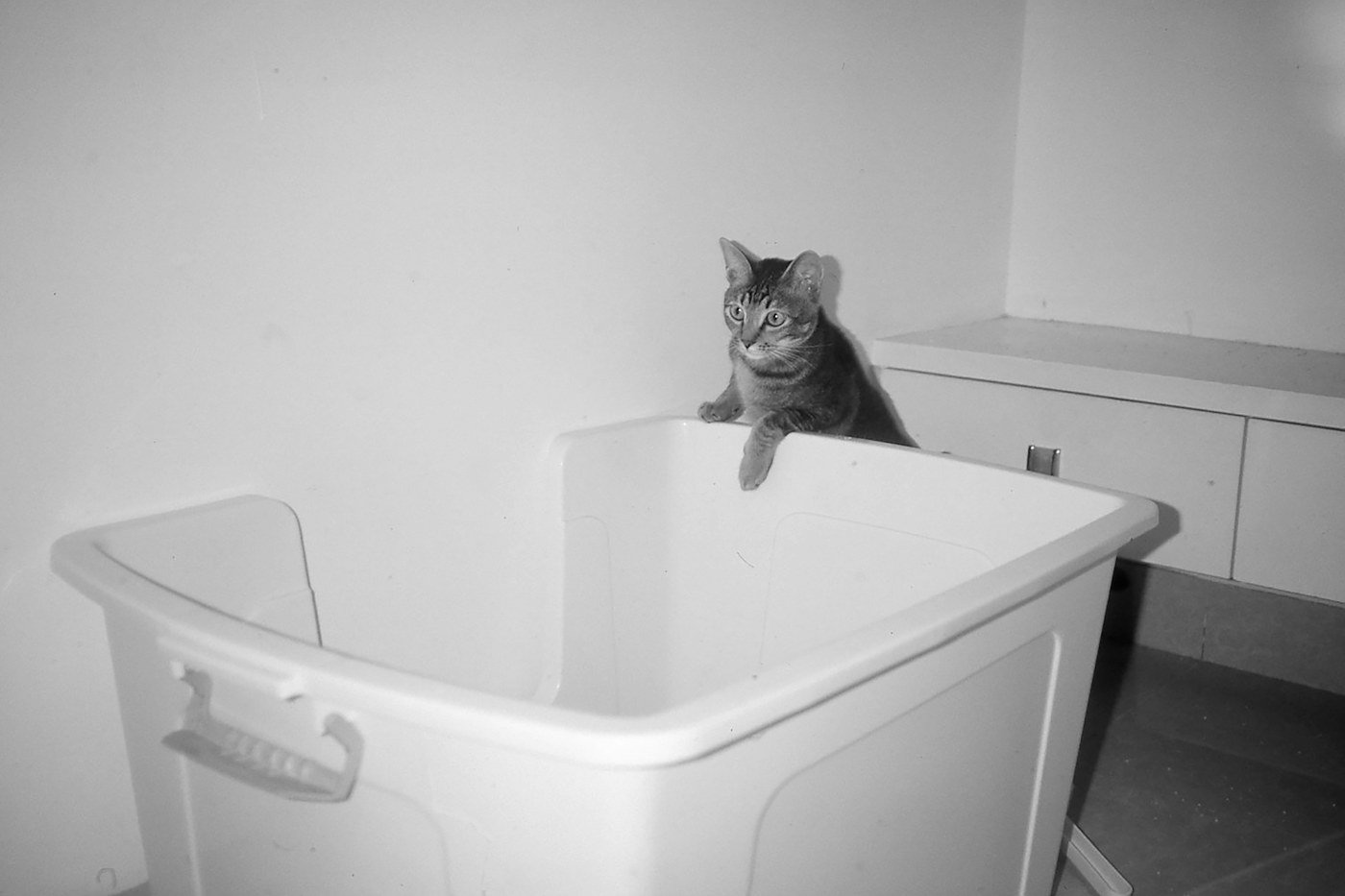
Set up a two-box litter preference test
- Keep the familiar box unchanged. Use the current litter, usual depth, normal location, and usual cleaning routine.
- Add a comparable second box beside it. Put only the new litter in this box. Match the box style and usable size as closely as practical so you are not testing “large versus small” or “covered versus open” at the same time.
- Use a similar litter depth. Ohio State suggests enough litter for scratching and burying—usually about two inches. Avoid adding fragrance, deodorizer, a new liner, or another novelty during the test.
- Keep both boxes clean. Scoop on the same schedule. A dirty familiar box and a freshly cleaned new box would bias the comparison.
- Record use, not just inspection. A sniff, one paw inside, or digging without elimination is not the same as choosing the box for urine or stool.
Observe across several normal bathroom cycles rather than judging a single visit. Do not remove the familiar box merely because the new one was used once. A repeatable pattern is more useful than a one-off event.
What the observation may mean—and what it cannot prove
| What you observe | What it suggests | Practical next step |
|---|---|---|
| The new box is used repeatedly for urine and stool | The new substrate is acceptable in this setup | Keep both choices stable a little longer, then transition gradually if you still need to retire the old litter |
| The cat inspects the new box but consistently uses the old one | The new texture or scent may be less acceptable | Keep the familiar option; try a different unscented, fine-textured candidate rather than forcing the switch |
| The cat uses one box for urine and the other for stool | Both may be acceptable; elimination-type preference is possible | Keep recording and preserve adequate box options |
| Both boxes are avoided | The issue may involve cleanliness, location, box design, access, stress, or health—not just litter | Restore the last reliably used setup and arrange veterinary guidance, especially if this is a new change |
| Use drops after you move one box away | Location may have mattered more than substrate | Return the box to the last reliably used place and change only one factor at a time |
A completed example (hypothetical)
This example is fictional and is not a story about Ruby, Loki, or Coco.
An owner wants to change from an unscented, fine clumping litter to paper pellets because the old litter tracks across the floor. Box A keeps the familiar litter. Box B is the same open style and similar size, placed beside Box A with paper pellets at a comparable usable depth. Both boxes are scooped together.
- Day-to-day pattern: the cat sniffs Box B twice and steps into it once, but all recorded urine and stool remain in Box A.
- What the owner can say: “In this setup, my cat consistently chose the familiar fine litter.”
- What the owner cannot say: “Paper litter is bad for cats” or “my cat is being stubborn.”
- Next decision: keep Box A available and, if a change is still needed, test another unscented lower-tracking option with a more similar texture. Change only the litter—not the box, location, and cleaning schedule at the same time.
When gradual mixing makes sense
A two-box test answers the question “Will my cat choose this new substrate?” If the new litter is accepted and you must consolidate later, a gradual mix can make the final change less abrupt. Cornell advises adding small amounts of new litter to the old when a brand switch is necessary.
There is no universal mixing schedule that suits every litter or every cat. Pellets, crystals, paper, and fine clumping litter behave differently, and a cat with sore joints, paw sensitivity, respiratory disease, or a history of urinary problems may need an individual plan from a veterinarian. If a manufacturer or veterinarian gives product-specific directions, follow those instead of a generic percentage formula.
Do not assume avoidance is “just preference”
New house-soiling or inconsistent box use deserves prompt attention. Cornell notes that urinary, kidney, thyroid, diabetic, digestive, mobility, and cognitive problems can all interfere with normal elimination—and cats with medical conditions do not always look sick.
Seek veterinary care promptly for painful or difficult urination, frequent attempts, crying while urinating, blood in the urine, or sudden urination outside the box. A cat that repeatedly strains and passes little or no urine needs immediate emergency treatment; Cornell identifies urethral obstruction as an absolute emergency.
Keep the rest of the litter-box system steady
The cleanest test changes one thing at a time. Keep access predictable, scoop both boxes consistently, and make sure each box is large enough for the cat to stand and turn. In a multi-cat home, one side-by-side pair should not replace the broader resource plan. Ohio State and Cornell recommend one box per cat plus one extra, with boxes available in appropriate locations.
For the routine that keeps observations comparable, use our daily litter-box cleaning and observation guide. If several cats share the home, pair this test with the multi-cat resource planning guide. And if the route to the box may be part of the problem, review the cat-friendly home route guide.
The takeaway
Do not make your cat prove acceptance by removing the only familiar toilet. Offer the new litter beside the old one, keep the boxes as comparable as practical, record actual elimination, and let a repeated pattern guide the next change. Preference testing reduces guesswork—but any sudden elimination change still belongs on the veterinary radar.
Sources and further reading
- The Ohio State University Indoor Pet Initiative: Litter Boxes — substrate, side-by-side choice, depth, box size, hygiene, location, and number.
- Cornell Feline Health Center: Feline Behavior Problems—House Soiling — sudden litter changes, gradual transition, medical causes, and veterinary evaluation.
- Cornell Feline Health Center: Feline Lower Urinary Tract Disease — urinary warning signs and obstruction emergencies.
Sources checked October 16, 2026. This educational guide supports observation and discussion with a veterinarian; it is not a diagnosis or an individualized treatment plan.