A scratching post can look perfect in a shop and still be ignored at home. Before choosing a replacement, look at the surface your cat already uses, how the cat stands, and where the scratching happens. Those details give you a practical starting point for choosing a cat scratcher.
This guide pairs established welfare advice with an original observation worksheet. It is a planning tool, not a product review or an account of Ruby’s behaviour. You can use it with a scratcher you already own; there is no shopping list to complete first.
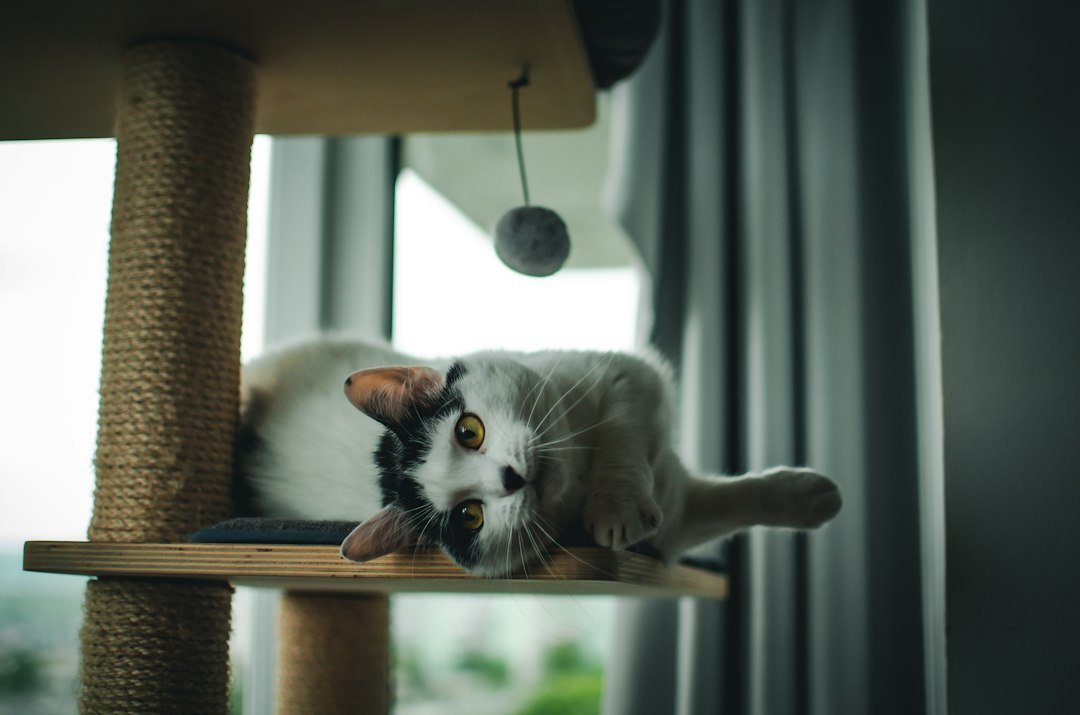
Aim for an appropriate scratching outlet
Scratching is normal feline behaviour. It helps cats stretch, leave marks and shed worn outer claw layers. The goal is to provide suitable places to scratch, rather than eliminate scratching altogether. The ASPCA’s scratching guidance explains this distinction.
For your notes, separate the behaviour from the object: “scratched the sofa arm after waking” is useful information. “Was naughty again” does not tell you what to change. Start with one frequently used spot rather than trying to redesign every room at once.
Check the scratcher before changing the cat’s routine
- Stability and reach: A scratcher should stay steady during use. For upright scratching, provide enough height for a full stretch. Assemble and secure it according to its instructions; an unstable post is not a useful test of preference.
- Direction: Notice whether your cat reaches upward or scratches a flat surface. A floor-level pad is an option for a cat choosing horizontal surfaces; one upright design will not suit every cat.
- Texture: Sisal, cardboard and carpet are among the surfaces cats may use. Observe your individual cat rather than assuming that the most expensive material will be the favourite.
The size-and-stability advice above follows the ASPCA guidance. For posture and texture, see Cat Friendly Homes’ guide to scratching posts and pads.
Give the location a specific job
Cat Friendly Homes recommends placing a scratcher near a sleeping area, where a cat may stretch after waking, or beside furniture already being scratched. Instead of hiding the new option in an unused corner, identify the exact spot you want it to serve.
Write a simple placement note: “beside the left sofa arm” is more useful than “living room.” If you later move the scratcher, date that change. Our cat-friendly home checklist can help you record the surrounding routes without turning this into a whole-house makeover.
Copy this scratcher observation sheet
Use a notebook or copy the prompts below into your phone. Make one entry when you happen to observe scratching. You do not need to follow the cat around, arrange a demonstration or count every scratch. If several cats live together, put the individual cat’s name on each entry.
| Record this | Your notes |
|---|---|
| Cat, date and time | Name; date; approximate time of the observation. |
| Exact location | Which room and which side of the furniture or scratcher? |
| Surface and direction | What was scratched? Was the cat reaching up or using a flat surface? |
| What happened | Approached only, scratched briefly, continued scratching, or walked away. |
| Any setup change | Record a moved scratcher or different pad. Write “none” if unchanged. |
| Next question | One detail you want to check again, without assigning a score. |
“Not observed” is a valid entry. It does not mean the scratcher was unused all day. Keep descriptions literal, and avoid treating one short observation as proof that a material has permanently succeeded or failed. This is a household note-taking aid, not a validated behaviour assessment.
Turn a note into one manageable comparison
Illustrative example—not an observation of Ruby: You record scratching at a sofa arm, while the available post sits across the room. Your next question could be, “What happens when this same post is placed beside that arm?” Date the move and leave a note about its previous position.
Changing the post, its surface and its location together makes your notes harder to interpret. Where practical, describe one setup change at a time. There is no promised number of days in which a cat must adopt an option, and this worksheet is not a reason to persist with an unsafe setup.
Encourage voluntary use
Reward suitable scratching promptly with something the cat enjoys, such as an appropriate treat or play. Cat Friendly Homes recommends positive reinforcement rather than punishment. Do not hold the cat’s paws against a post or drag the claws over it; the ASPCA warns that forced demonstrations can frighten cats.
A well-used scratcher does not need replacing merely because it looks shabby. Keep favourite options when they remain safe; repair or replace unsafe equipment. The play observation guide offers another way to keep notes about activities your cat chooses.
Know when the worksheet is not enough
If you are concerned about a sudden change, discomfort or persistent behaviour problems, contact your veterinarian instead of treating the log as a diagnosis. Bring the notes to explain what you actually saw. You do not need to complete the worksheet before seeking help.
For a multi-cat household, review each cat’s access to essentials with our multi-cat home checklist. For this article’s task, finish with one concrete question: which scratching option will you observe next, and where will it be?
Sources and further reading
- Cat Friendly Homes: All You Need to Know About Scratching Posts — posture, texture, placement and positive reinforcement.
- ASPCA: Destructive Scratching — normal scratching, sturdy alternatives and avoiding forced paw handling.
Sources checked on 21 September 2026. The observation sheet and illustrative example are original Ruby Cat Life editorial tools. General education, not individual veterinary advice.